
Flat feet also popular as fallen arches is a widespread problem across the country, thanks to one of a common reason of obesity. However, there could be other reasons which includes Hereditary links, diabetes, pregnancy, ageing feet, injury/fracture or arthritis. A foot starts to develop arch when the body is growing and by the time it reaches to its full form, the feet has already developed its normal arches. Hence it is noted that a child must be involved in some or other physical activity which requires balancing on your feet and maintaining an active posture, the absence of which may also lead to the child suffering from flat feet right from the childhood.
One common form of flat foot is flexible flatfoot, usually develops in both the feet and starts to appear in childhood itself. In this condition, the foot becomes flat when it balancing the body but develops normal arches when the foot is on rest.
Flexible flatfoot is a common form of flatfoot that typically shows up in children and worsens with age. Flexible flatfoot usually occurs in both feet and is characterized by feet that flatten (the arch gives way) when the foot is supporting the body, but regains its arch when the foot is relaxed.
How can you identify whether you flat feet or normal ones?
The common symptoms of identifying your flat feet are:
- Difficulty in maintaining balance of your body
- Twisted ankles instead of straight ones
- Pain in the inner side of your foot and arch
- Lack or absence of arch when your feet supports your body
Why Should I worry about Flat Feet?
Flat feet, although it may seem to be just a minor physical deformity, it can completely alter the functioning of your feet and ankle and can lead to various issues which includes inflammation of ligaments and muscles, fatigue and pain in feet and ankle, plantar fasciitis, bunions, hammer toes, frequent falls/fractures/injuries and even arthritis
Treatment
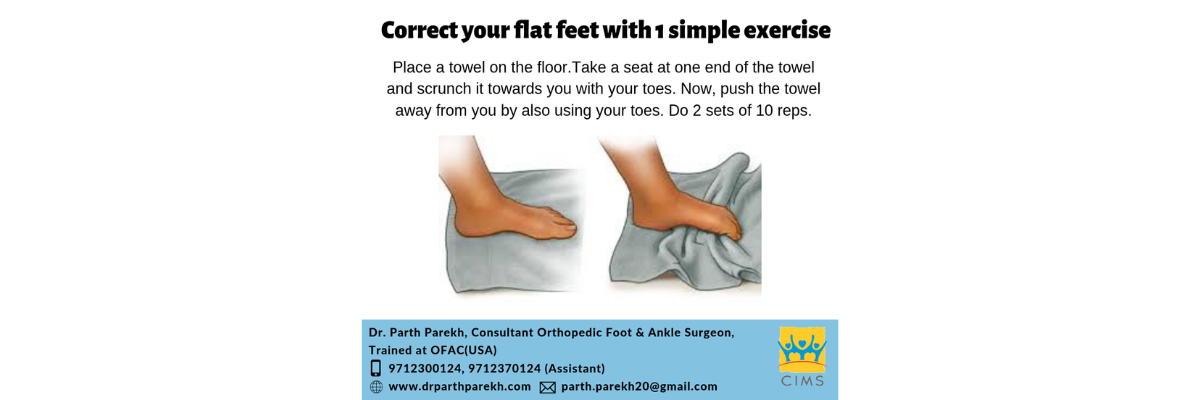
Not so severe cases of flat feet can be corrected with certain regular sessions of home exercises. Some of recommended exercise that you may do at home are below:
https://www.facebook.com/drparthpparekh/videos/flat-feet-exercises/209824916860206/
Your flat feet may also be corrected with braces, custom shoe inserts, orthotic shoes and daily physio-therapies. However certain cases of flat feet are severe, which cannot be corrected through non-surgical measures and are accompanied by inflammation, pain and other foot complexities, in which a foot specialist must be contacted immediately. Also some cases of flat feet can be corrected only through surgery.
When diagnosing flat feet, the feet specialist conducts a full foot examination with focus given to the biomechanical effectiveness of the foot. X-rays are usually performed to analyse bone and joint alignments as well. With this review, the foot specialist will also be able to suggest next steps in treatment as well as footwear options – from the best daily shoes to running shoes for flat feet.
For more information on flat feet or to have your feet assessed and treated, contact us today or schedule an appointment at either +91 97123 00124 or mailing me directly at parth.parekh20@gmail.com


