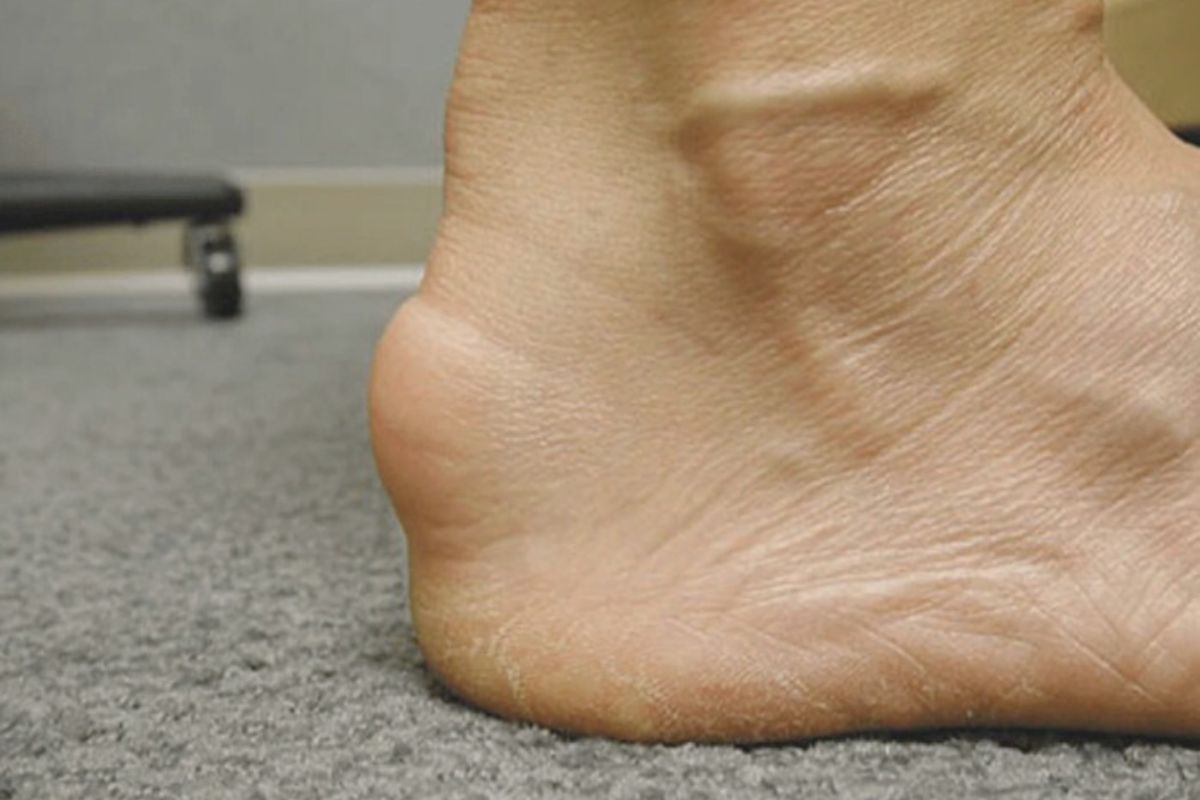
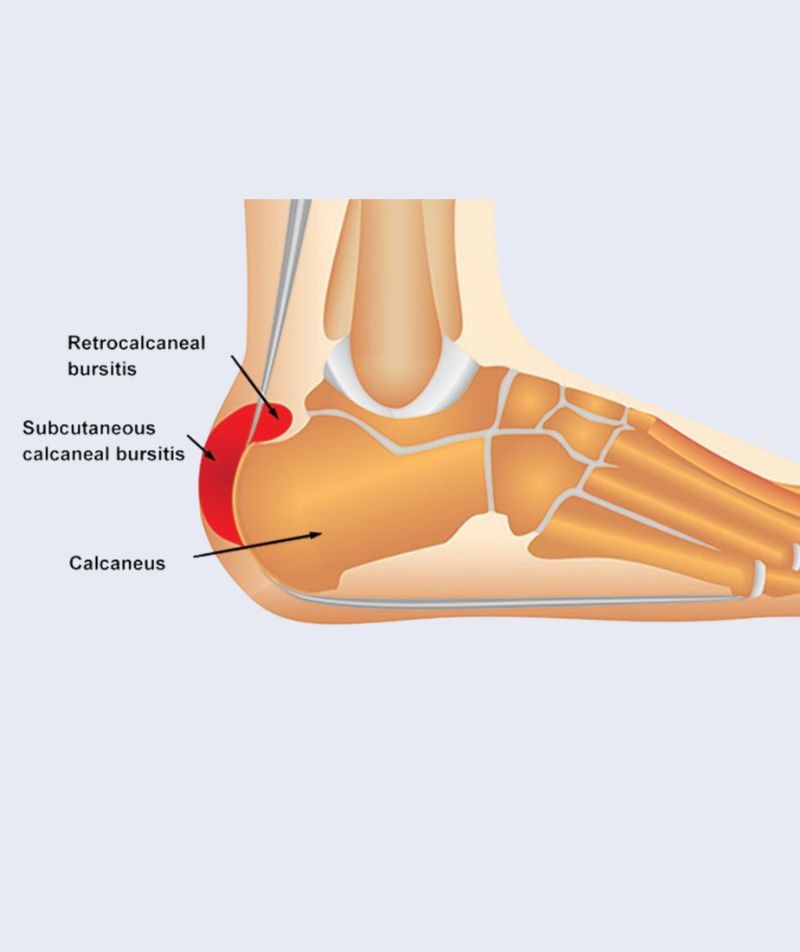
It is literally inflammation of the bursa, a small sac which is located over the heel bone and just ahead of the tendo-achilies which inserts into the heel bone. Symptoms in the form of pain, swelling, redness and discomfort behind and above the heel. Pain typically occurs when the heel is loaded. The causes of this deformity are repetitive trauma, tendo-achilies rubbing against the bursa and causing friction with the heel bone. Retro-calcaneal bursitis can also be associated with achilies tendonitis, plantar fasciitis, fibromyalgia, rheumatoid arthritis. Diagnosis in the form of history taking and physical examination and X-rays, ultrasound, CT- scan and /or MRI. Treatment basically consists of ice application and medication. It also depends on the staging. Stage 1 – pain relief, protection Stage 2 – restoring normal range of motion, strength Stage 3 - restoring full function Stage 4 – preventing a recurrence. Surgery in the form of bursectomy can be considered for chronic symptoms.
Reasons Behind Retrocalcaneal Bursitis
- Overuse or repetitive impact (running, jumping)
- Tight Achilles tendon placing excess pressure on the bursa
- Biomechanical abnormalities, such as high arches or leg-length discrepancy
- Improper footwear with rigid heel counters or poor cushioning
- Direct trauma to the back of the heel
- Haglund’s deformity or bone spurs that irritate the bursa
- Systemic inflammatory conditions (e.g., rheumatoid arthritis)
Treatment Options for Retrocalcaneal Bursitis
- Rest and activity modification (reduce impact activities)
- Ice therapy applied to the back of the heel
- NSAIDs for pain and inflammation control
- Heel lifts or cushioned heel pads to offload pressure
- Stretching and strengthening exercises for the calf–Achilles complex
- Physical therapy, including ultrasound or shockwave therapy
- Corticosteroid injection into the bursa (when conservative care fails)

How Dr. Parth Parekh Can Help You
- Accurate diagnosis with focused clinical exam and imaging (X-ray/MRI)
- Identification and correction of underlying biomechanical issues
- Customized non-surgical treatment plan emphasizing rapid pain relief
- Expertise in ultrasound-guided injections for precise corticosteroid delivery
- Guidance on activity progression and return-to-sport protocols
- Close follow-up to ensure lasting recovery and prevent recurrence
Benefit from Dr. Parekh’s specialized training in heel disorders and his track record of over 2,500 foot & ankle procedures. Don’t let heel inflammation slow you down schedule your consultation with Dr. Parth Parekh today and get back to pain-free movement!
Types of sports injuries
Some of the more common sports injuries include:

Ankle sprain
symptoms include pain, swelling and stiffness.

Cuts and abrasions
are usually caused by falls. The knees and hands are particularly prone.

Bruises
a blow can cause small bleeds into the skin

Stress fractures
Particularly in the lower limbs.