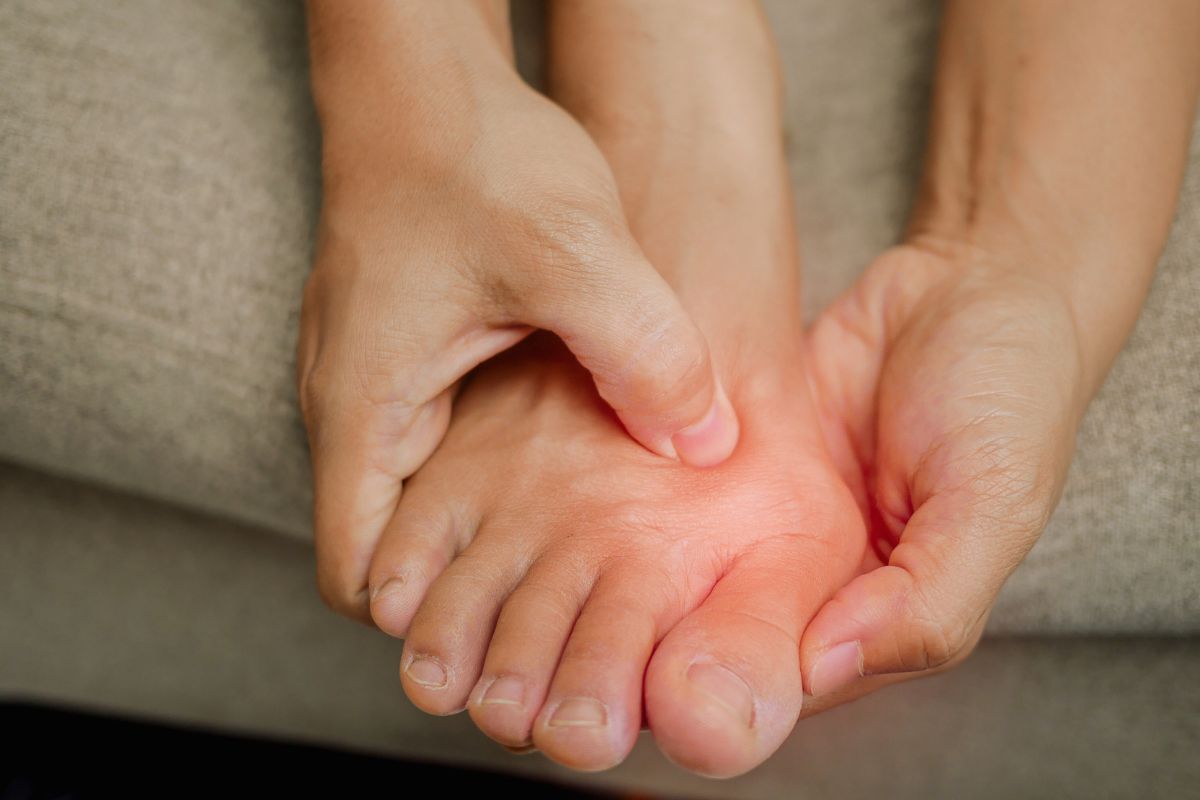
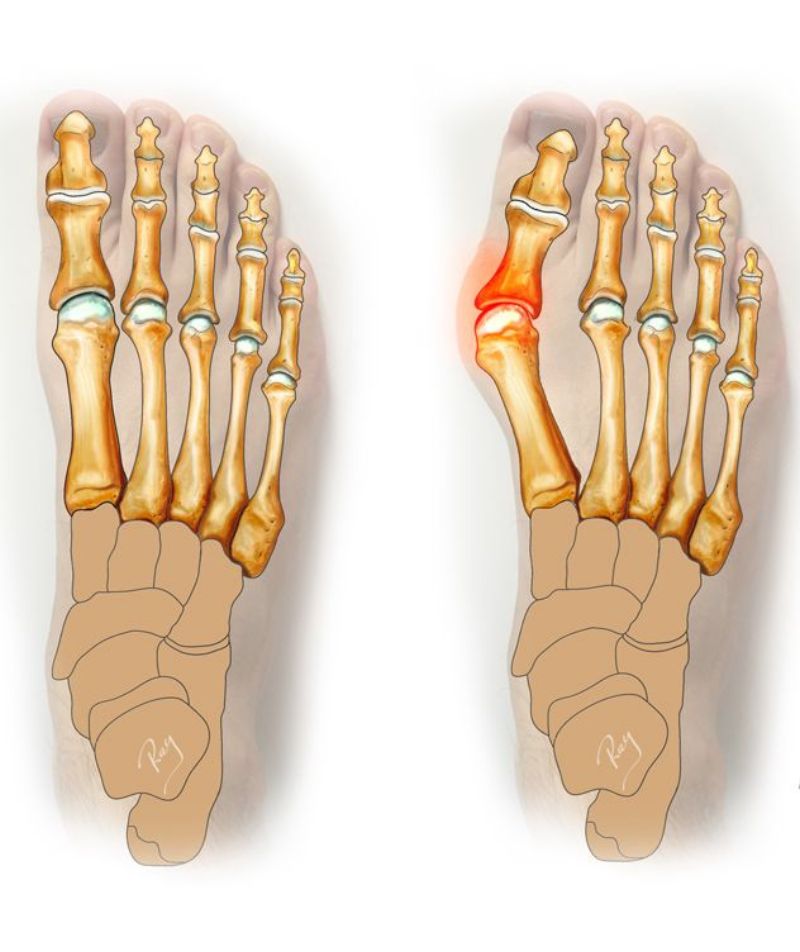
Typically thought of as a bump on the side of the toe’s. This may reflect changes in appearance of the alignment of the toe’s and also the anatomy. This happens overtime and has a genetic or hereditary component. It also is associated with patient of flat foot as well as people wearing tight shoes or pointed shoe’s. Symptoms felt by the patients range from pain, inflammation, swelling, redness and/or discomfort. Diagnosis is made by clinical and history taking and grading of severity over radiographs. Treatment mostly consists of conservative management which can be in the form of non- steroidal anti-inflammatory drugs, pads, spacers, exercises, shoe modifications and/or orthosis. When the severity is more surgical treatment is the only option. The goal of the surgery is not the cosmetic but the alignment of the toe’s.
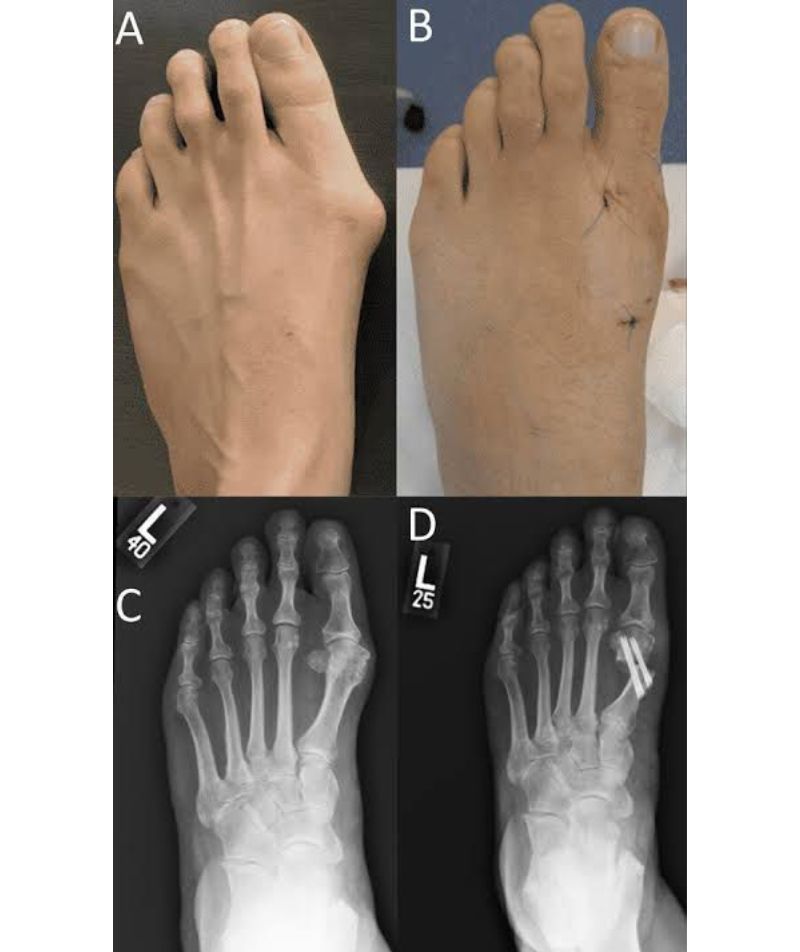
Reasons Behind Bunions
- Genetics, inherited foot structure and biomechanics
- Tight, narrow, or high-heeled footwear that compresses the toes
- Flat feet or overpronation, placing extra stress on the big toe joint
- Arthritis, particularly inflammatory types like rheumatoid arthritis
- Ligament laxity or neuromuscular conditions
- Repetitive stress or trauma to the toe joint
Treatment Options for Hallux Valgus
- Footwear modification—wide-toebox, low-heeled shoes
- Custom orthotic inserts to improve alignment and offload pressure
- Padding and splinting to relieve friction and correct toe position
- NSAIDs or corticosteroid injections for pain and inflammation
- Physical therapy focusing on toe mobilization and strengthening
- Minimally invasive bunion surgery (e.g., chevron osteotomy)
- Open reconstructive surgery in advanced or recurrent cases
How Dr. Parth Parekh Can Help You
- Precision diagnosis with weight-bearing X-rays and gait analysis
- Non-surgical management tailored to your lifestyle and footwear needs
- Advanced surgical techniques (minimally invasive and open) for optimal correction
- Rapid rehabilitation protocols to restore mobility and function
- Long-term follow-up to prevent recurrence
With over 2,500+ foot and ankle surgeries under his belt, Dr. Parekh’s outcomes-driven approach ensures both cosmetic and functional correction.
Ready to walk pain-free? Schedule your bunion evaluation with Dr. Parth Parekh today and take the first step toward lasting relief!
Types of sports injuries
Some of the more common sports injuries include:

Ankle sprain
symptoms include pain, swelling and stiffness.

Cuts and abrasions
are usually caused by falls. The knees and hands are particularly prone.

Bruises
a blow can cause small bleeds into the skin

Stress fractures
Particularly in the lower limbs.